Easter and Holy Week


Summary
Easter celebrates God’s victory over death through Jesus’ resurrection and the launch of a brand-new creation. But to feel the weight of that morning, you have to walk through the week that led to it. Holy Week slows us down and lets us see what was happening: betrayal, injustice, courage, surrender—and a kingdom taking shape in the dark. This guide traces those days through key scenes in the gospels of Luke and Matthew, showing how each moment connects with the Bible’s larger narrative about God blessing and renewing the whole world. Easter isn’t only about what happened to Jesus. It’s about what God is doing with everything and everyone.
What Is Easter?
Easter commemorates the turning point of history: Jesus of Nazareth’s holy week, his crucifixion, and especially his resurrection during the 1st century CE, which is seen by many as the best news ever shared. It’s the day a revolution of love began.
For millennia, the threat of death drove most human decision-making, leading to violence and suffering that made all creation ache for peace. People believed that peace came through strength, by destroying “evil” or “ungodly” people. But Jesus brings peace through a greater strength: the power of forgiveness, generosity, and enemy love. Beyond teaching such things, Jesus lived them out, even as his enemies were plotting and carrying out his unjust execution. But even crucifixion could not stop him. Jesus’ resurrection exposes divine love as stronger than death. The grave cannot keep him down.
Jesus’ way of life illuminates new possibilities for people to love one another freely. He starts changing history and re-creating the world and everyone in it to be compelled by love for each other, not fear of death.
In the Bible, Jesus’ resurrection sets “new creation” (2 Cor. 5:17) in motion. The resurrected Jesus is named “firstborn over all creation” (Col. 1:15). He shows the world a new, loving way to be human. Easter confirms his way is incorruptible, stripping even death of its victory. It no longer “stings” (1 Cor. 15:55) because it doesn’t end life—it’s a transition into the new life God has in store.
The result? Jesus’ seemingly small impact has unprecedented power, so much so that history itself starts changing. Today, calendars worldwide recognize this man as the hinge between two eras, one before Christ and one after.

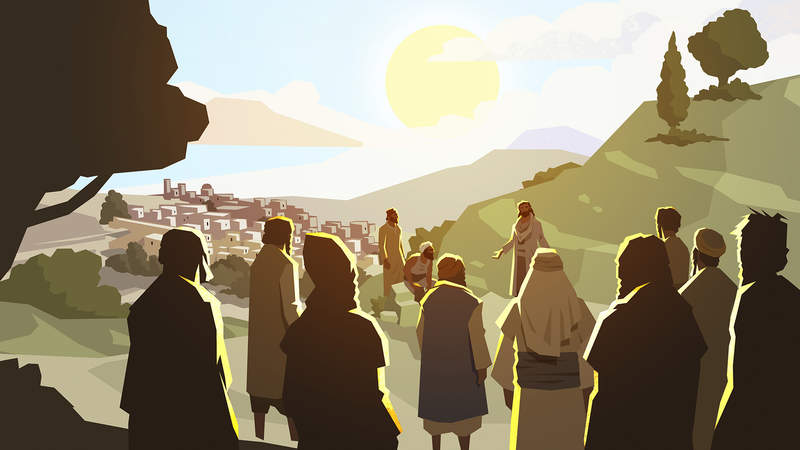
According to the New Testament, those who follow Jesus are being made new every day (2 Cor. 4:16). It’s the best news ever, from Jesus, who promises that God’s life and love will once again make the entire world good, beautiful, and right-functioning.
As one New Testament writer, John, puts it, Jesus “will wipe away every tear … and there will no longer be any death. There will no longer be any mourning, or crying, or pain; the first things have passed away” (Rev. 21:4 NASB). New creation is a world where our love for God and for each other truly comes to life.
Watch this video about the Resurrection of Jesus to learn more about Luke’s account of Jesus rising from the dead.

What Are the Key Events of Holy Week, and How Do They Help Us Understand Easter?
Easter makes more sense when you see how it fits into Holy Week, the final days before Jesus’ death and resurrection. Crowds first hail Jesus as King. Days later, crowds mock him. Enemies close in to kill Jesus, who doesn’t fight back or run away. Instead, he shares a Passover meal with his friends and starts a new exodus to lead humanity out of enslavement, into freedom in God’s Kingdom. Holy Week and Easter therefore remember not only Jesus’ resurrection but also God’s renewal of all things.
Before Jesus’ arrival, people were aching for a divine king, a messiah. Jesus had divine power, but he wasn’t looking much like a king. No war horses. No armies. He’s riding a young donkey and leading a group of apprentices during his “triumphal entry” into Jerusalem on the first day of Holy Week (Matt. 21:1-11, Mark 11:1-11, John 12:12-19). Israel’s prophet Zechariah promised that God’s King would arrive on a young donkey (Zech. 9:9), so Jesus is signaling two truths: He is the rescuing King, and he’s not what most expect.


Later that week, on Maundy Thursday, Jesus shares a Passover meal with his disciples to remember Israel’s exodus from Egypt, when they experienced God’s power to free them from slavery. Like Moses, Jesus is rescuing people out of slavery. But Jesus leads with new instruction and much greater power.
“Maundy” comes from the Latin mandatum, meaning “command” or “instruction.” During the meal, Jesus gives a new command: His followers are to love one another like he has loved them (John 13:34). He kneels to scrub each disciple’s feet, and he says it’s an example of the way God’s power works (John 13:3-20), through blessing and humble love. This way of Christ, the New Testament insists, is how God destroys evil and heals the world.


Loving enemies? It’s a nice idea, but it sounds naive and ineffective, especially for a king. Divinely appointed rulers are conquerors, not sacrificers. So by Friday, the surrounding crowds are shouting “Crucify! Crucify!” (John 19:6, Matt. 27:22, Mark 15:13, Luke 23:21).
Key moments like these—the humble entry on a donkey, the foot-washing at Passover, and the self-giving death on a cross—all set the stage for Easter, the day God begins setting things right, not forcefully, but with the power of unbreakable love.
When Jesus is resurrected three days after his burial, completing his “holy week,” he is vindicated as the good King who makes all things new (Rev. 21:5). And his work of bringing new creation is celebrated worldwide every year during Holy Week and Easter Sunday.
Watch this video about the Crucifixion of Jesus to learn more about the events leading up to Jesus’ resurrection.

What Changed After Holy Week?
Because of Jesus’ resurrection at the climax of Holy Week, the Apostle Paul says “death has been swallowed up in victory” (1 Cor. 15:54). Swallowing up death would radically change the world, one would think, but violent wars rage on today. Everyone still dies. Those who witnessed Jesus after his resurrection—his disciples and hundreds more (1 Cor. 15:6)—surely gained new perspectives on life and death. But day-to-day life carried on as usual for most people.
Yet when we look at Scripture’s larger story, we see that everything changed after Holy Week.
Throughout the Hebrew Bible (the Old Testament), humanity’s desire to experience peace and the good life with God gets frustrated by limited access to his presence. Genesis 2 portrays the garden of Eden like a temple, a place where Heaven and Earth overlap and God dwells with humanity. But when the first humans ignore God’s instruction, they are exiled from the garden. God stations angelic beings, called cherubim, at the entrance, barring the way back (Gen. 3:24).


The story unfolding from there to the end of Scripture shows humanity trying to reunite with God. Two key locations stand out. One is Israel’s tabernacle, which becomes a mobile temple, an Eden-like space where humans can again dwell with God. The second is the temple in Jerusalem, which later replaces the tabernacle. The authors describe both as renewed points of access to God, but each has strict limitations.
Only Israel’s high priest may enter the temple’s most sacred space, the holy of holies where God dwells, and only once a year on Yom Kippur (also called the Day of Atonement). A thick curtain embroidered with cherubim blocks the way, echoing Eden’s guarded gate. While traditions and holy spaces change over time, this restricted access to God stays the same—until God arrives in Jesus.
Being in Jesus’ presence is also being in God’s presence, so John describes Jesus as the new temple (John 2:19-21), the new sacred space where Heaven and Earth overlap. At Jesus’ death, the thick temple veil tears in two (Mark 15:38, Matt. 27:51) and access to God’s dwelling place opens wide. In Jesus, the good life with God opens for all people without limitation.

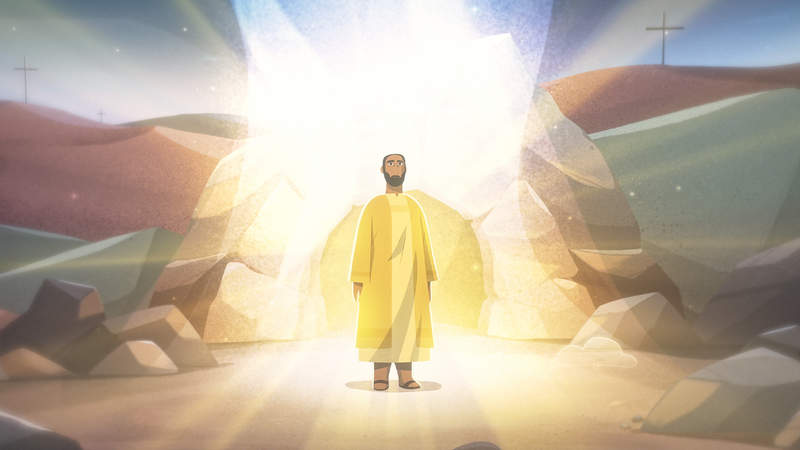
After his resurrection, Jesus says those who follow his way will live in God’s Spirit and become a living temple for the entire world (Eph. 2:19-22, 2 Cor. 6:16). God no longer works through a single sacred space but through people everywhere, bringing renewal, healing, and reconciliation to all creation (2 Cor. 5:17-21).
On the surface, the world looked much the same after Holy Week. But beneath the surface, a global transformation had begun. Goodness and peace through union with God became freely available to all through Jesus.
Watch this video on Heaven and Earth to learn more about God’s temple moving from a fixed location to Jesus and his followers.
Dive Deeper
So far we’ve just skimmed the surface. Explore these studies to take a deeper dive into how this theme contributes to the whole story of the Bible.
Read
21 When they had approached Jerusalem and had come to Bethphage, at the Mount of Olives, Jesus then sent two disciples, 2 saying to them, “Go into the village opposite you, and immediately you will find a donkey tied there and a colt with it. Untie them and bring them to Me. 3 And if anyone says anything to you, you shall say, ‘The Lord needs them,’ and he will send them on immediately.” 4 Now this took place so that what was spoken through the prophet would be fulfilled:
5 “Say to the daughter of Zion,
‘Behold your King is coming to you,
Humble, and mounted on a donkey,
Even on a colt, the foal of a donkey.’”
6 The disciples went and did just as Jesus had instructed them, 7 and brought the donkey and the colt, and laid their cloaks on them; and He sat on the cloaks. 8 Most of the crowd spread their cloaks on the road, and others were cutting branches from the trees and spreading them on the road. 9 Now the crowds going ahead of Him, and those who followed, were shouting,“Hosanna to the Son of David;
Blessed is the One who comes in the name of the Lord;
Hosanna in the highest!”
10 When He had entered Jerusalem, all the city was stirred, saying, “Who is this?” 11 And the crowds were saying, “This is Jesus the prophet, from Nazareth in Galilee.”
9 Rejoice greatly, daughter of Zion!
Shout in triumph, daughter of Jerusalem!
Behold, your king is coming to you;
He is righteous and endowed with salvation,
Humble, and mounted on a donkey,
Even on a colt, the foal of a donkey.
10 And I will eliminate the chariot from Ephraim
And the horse from Jerusalem;
And the bow of war will be eliminated.
And He will speak peace to the nations;
And His dominion will be from sea to sea,
And from the Euphrates River to the ends of the earth.
22 A stone which the builders rejected
Has become the chief cornerstone.
23 This came about from the Lord;
It is marvelous in our eyes.
24 This is the day which the Lord has made;
Let’s rejoice and be glad in it.
25 Please, O Lord, do save us;
Please, O Lord, do send prosperity!
26 Blessed is the one who comes in the name of the Lord;
We have blessed you from the house of the Lord.
27 The Lord is God, and He has given us light;
Bind the festival sacrifice to the horns of the altar with cords.
Consider
In Jesus’ world, when a new king rose to power, citizens in the capital city would party when his royal procession entered triumphantly. Imagine joyful celebration everywhere—crowds singing and dancing, welcoming their new ruler. On what we now call Palm Sunday, Jesus enters Jerusalem the same way … kind of.
Jerusalem’s crowds wave palm branches (John 12:13), recalling the victory celebration for Judas Maccabeus, who had thrown off Israel’s oppressors a couple of centuries earlier (2 Maccabees 10:1-7). They roll out an ancient “red carpet” of garments before Jesus, an echo from the old story about King Jehu’s coronation (2 Kgs. 9:1-13).
The crowds also sing, “Hosanna!” which is an expression of praise from the Hebrew hoshi‘ah na’, meaning “Save us!” It’s a picture of people desperate for help, likely expecting Jesus to mimic the kings of old (Matt. 21:9).
Praising him as the promised ruler “who comes in the name of the Lord” (Matt. 21:9, Ps. 118:26), many expect Jesus to fit the old profile of an empire-toppling, Israelite-saving ruler. But Jesus mounts a donkey instead of a warhorse, enacting the prophecy from Zechariah 9:9-10 about a coming king who brings peace, not aggression, and is a gentle ruler, not a warrior.
A few days after his “triumphal” entry, the crowds around Jesus start mocking him. The author of Psalm 118:22 envisioned such rejection long before. He suggested that the messiah would offend expectations and, rather than being welcomed, would be the “stone which the builders rejected,” who forms the “cornerstone” of God’s new creation (Matt. 21:42; see Acts 4:11-12).
Jesus’ final coronation happens through death and resurrection. The power of humility, forgiveness, and love looks weak, even to Jesus’ closest friends, until they find his grave empty.
Reflect
How does Jesus’ way of ruling challenge you personally or reframe assumptions about God’s way of eradicating evil? How might it comfort you?
More Relevant Scripture References
- Luke 19:28-44
- Mark 11:1-11
- John 12:12-19
Read
12 And Jesus entered the temple area and drove out all those who were selling and buying on the temple grounds, and He overturned the tables of the money changers and the seats of those who were selling doves. 13 And He *said to them, “It is written: ‘My house will be called a house of prayer’; but you are making it a den of robbers.”
14 And those who were blind and those who limped came to Him in the temple area, and He healed them. 15 But when the chief priests and the scribes saw the wonderful things that He had done, and the children who were shouting in the temple area, “Hosanna to the Son of David,” they became indignant, 16 and they said to Him, “Do You hear what these children are saying?” And Jesus *said to them, “Yes. Have you never read, ‘From the mouths of infants and nursing babies You have prepared praise for Yourself’ ?” 17 And He left them and went out of the city to Bethany, and spent the night there.
6 “Also the foreigners who join themselves to the Lord,
To attend to His service and to love the name of the Lord,
To be His servants, every one who keeps the Sabbath so as not to profane it,
And holds firmly to My covenant;
7 Even those I will bring to My holy mountain,
And make them joyful in My house of prayer.
Their burnt offerings and their sacrifices will be acceptable on My altar;
For My house will be called a house of prayer for all the peoples.”
8 The Lord God, who gathers the dispersed of Israel, declares,
“I will yet gather others to them, to those already gathered.”
8 “Behold, you are trusting in deceptive words to no avail. 9 Will you steal, murder, commit adultery, swear falsely, offer sacrifices to Baal, and follow other gods that you have not known, 10 then come and stand before Me in this house which is called by My name, and say, ‘We are saved!’— so that you may do all these abominations? 11 Has this house, which is called by My name, become a den of robbers in your sight? Behold, I Myself have seen it,” declares the Lord.
Consider
In a world that expected God’s messiah to honor Jerusalem’s temple, Jesus does the opposite. He witnesses corruption in the temple and acts to end it. In his day, Jerusalem’s temple provided a massive dedicated Court of the Gentiles for non-Jewish people to meet with God in prayer. But stalls for selling sacrificial animals and exchanging foreign currency had crowded the space and pushed non-Jewish people out.
For long-distance travelers to worship properly, they needed perfect, unblemished animals to be sold near the temple. And the temple tax required Jewish currency, meaning foreigners had to exchange money. Providing these services was good, but doing so by crowding out Gentiles contradicted God’s instruction and purpose for the temple.
So Jesus cracks a whip to drive out the livestock. He flips the money changers’ tables and scatters their coins. Then, quoting Isaiah 56:7, he shocks everyone. “My house will be called a house of prayer,” he says (Matt. 21:13), suggesting that he is ruler over the temple, a status reserved only for God. And he’s counting on his audience to recall the rest of the verse, describing it as a house of prayer “for all people,” not just Israel.
Then he echoes the prophet Jeremiah, who once stood before Jerusalem’s temple and exposed similar corruption, saying the people were turning God’s holy space into “a den of robbers” (Jer. 7:11). Jesus says the same thing in the same place with a new audience.
Both times, the people misunderstood the temple’s purpose. They forgot God’s priority of love and blessing for every nation on Earth, which God first expressed to Israel’s patriarch, Abraham (Gen. 12:1-3).
Immediately after tossing the tables, while still in the temple, Jesus restores sight to blind people and heals those who cannot walk. Those suffering disease and disability had also experienced exclusion from God’s holy space (Lev. 21:17-18), and Jesus’ healing now made re-entry possible.
As God in the flesh, Jesus shows God’s impartial love and intent to reunite with humanity: Jewish, non-Jewish, everyone.
Matthew’s description of this scene in Matthew 21:12-17 encourages readers to see that Jesus is not only the legitimate ruler over Jerusalem’s temple, but also the one who fulfills its purpose by loving and blessing all people. Jesus invites everyone to draw near to God through him.
Reflect
In Genesis 12:3, God calls Abraham and his family (Israel) to become a blessing to “all the families of the Earth.” How does this challenge traditions that exclude or disregard people outside their religious community?
More Relevant Scripture References
- Genesis 12:1-3
- Malachi 3:1-4
- Mark 11:15-19
- Luke 19:45-48
- John 2:13-22
Read
24 Jesus left the temple area and was going on His way when His disciples came up to point out the temple buildings to Him. 2 But He responded and said to them, “Do you not see all these things? Truly I say to you, not one stone here will be left upon another, which will not be torn down.”
3 And as He was sitting on the Mount of Olives, the disciples came to Him privately, saying, “Tell us, when will these things happen, and what will be the sign of Your coming, and of the end of the age?”
4 And Jesus answered and said to them, “See to it that no one misleads you. 5 For many will come in My name, saying, ‘I am the Christ,’ and they will mislead many people. 6 And you will be hearing of wars and rumors of wars. See that you are not alarmed, for those things must take place, but that is not yet the end. 7 For nation will rise against nation, and kingdom against kingdom, and there will be famines and earthquakes in various places. 8 But all these things are merely the beginning of birth pains.
9 “Then they will hand you over to tribulation and kill you, and you will be hated by all nations because of My name. 10 And at that time many will fall away, and they will betray one another and hate one another. 11 And many false prophets will rise up and mislead many people. 12 And because lawlessness is increased, most people’s love will become cold. 13 But the one who endures to the end is the one who will be saved. 14 This gospel of the kingdom shall be preached in the whole world as a testimony to all the nations, and then the end will come.
15 “Therefore when you see the abomination of desolation which was spoken of through Daniel the prophet, standing in the holy place— let the reader understand— 16 then those who are in Judea must flee to the mountains.
Consider
Nothing rattles people like the collapse of something they thought God could never let fall.
During the week before his crucifixion, Jesus publicly exposes greed and injustice in Jerusalem’s temple system. Leaders and merchants who benefitted from the corruption hated him for it, and even though Jesus made no threats, his light threatened the collapse of their dark power (Matt. 21:12-13, 23:1-38).
Jesus’ disciples harbor no hate for Jesus, but they are dazzled (perhaps blinded) by the temple’s grandeur (Luke 21:5). So when Jesus says the temple will be destroyed down to rubble—and with it, the world as they know it—they’re shocked.
Panic follows. For early 1st-century Jewish people, the destruction of the temple would be unthinkable. So the disciples demand a timeline: When will this happen? (Matt. 24:3).
Jesus warns against any attempt to nail down a timeline. There will be wars and rumors of war, disaster and upheaval. Fear will tempt you to trust false saviors—false messiahs—who make promises they can’t keep (Matt. 24:5), Jesus says. Don’t let terrifying news manipulate you into trusting human strategies for salvation. Instead, stay focused on me, and keep loving others like I do.
As the old order passes away, the wars and natural disasters are necessary labor pains, leading to a newborn world (Mark 13:7). Those trusting Jesus will see the collapse of unjust systems not as a cause for despair, but as a sign that God’s renewing work is underway.
The stone temple is coming down, but God’s place for meeting with humanity is not lost. It now lives in people. Jesus and those who follow his way become the new space where humanity meets God, as they become a rebuilt temple.
Peter later names this reality, writing that Jesus’ followers are “living stones … being built into a spiritual house” (1 Pet. 2:5). As they abandon old patterns and embrace Jesus’ way of love, they restore the temple’s true purpose.
Easter reminds us that chaos never has the final word. Jesus does. And as God, he says, “Behold, I am making all things new” (Rev. 21:5 NASB).
Reflect
How would it change your perspective to see upheavals in our world as labor pains, leading to the birth of God’s new creation?
More Relevant Scripture References
- Mark 13:1-13
- Colossians 1:15-20
- Ephesians 2:19-22
- 1 Peter 2:4-5
- Revelation 21:1-5
Read
26 When Jesus had finished all these words, He said to His disciples, 2 “You know that after two days the Passover is coming, and the Son of Man is to be handed over for crucifixion.”
3 At that time the chief priests and the elders of the people were gathered together in the courtyard of the high priest named Caiaphas; 4 and they plotted together to arrest Jesus covertly and kill Him. 5 But they were saying, “Not during the festival, otherwise a riot might occur among the people.”
6 Now when Jesus was in Bethany, at the home of Simon the Leper, 7 a woman came to Him with an alabaster vial of very expensive perfume, and she poured it on His head as He was reclining at the table. 8 But the disciples were indignant when they saw this, and said, “Why this waste? 9 For this perfume could have been sold for a high price and the money given to the poor.” 10 But Jesus, aware of this, said to them, “Why are you bothering the woman? For she has done a good deed for Me. 11 For you always have the poor with you; but you do not always have Me. 12 For when she poured this perfume on My body, she did it to prepare Me for burial. 13 Truly I say to you, wherever this gospel is preached in the whole world, what this woman has done will also be told in memory of her.”
14 Then one of the twelve, named Judas Iscariot, went to the chief priests 15 and said, “What are you willing to give me to betray Him to you?” And they set out for him thirty pieces of silver. 16 And from then on he looked for a good opportunity to betray Jesus.
Consider
When Jesus identifies himself as God’s long-promised King and performs miracles with divine power, many see in him a ruler who can finally crush their enemies. But Jesus tells his disciples he will be crushed by his enemies in his battle to end evil (Matt. 16:21-23, 17:22-23, 20:17-19, 26:1-2).
Why would a man who claims to be king willingly die? And saviors are not generally victims. So how can one person be both king and victim? It made no sense.
But one woman takes Jesus at his word. Matthew doesn’t tell us her name, but she’s famous for bringing an expensive alabaster jar filled with perfume and pouring it on Jesus to anoint him before his death. She likely fails to understand everything that’s happening, but she still trusts Jesus completely and honors him like a king.
This kind of anointing typically happened after death, and the disciples balk at such lavish generosity. By their calculation, she’s wasting a year’s worth of wages (Mark 14:5) on a man who is very much alive. She sees the bigger picture, though. Her actions declare: Not only do I believe you must die, but I also want to give you the honorable burial you deserve.
Jesus’ disciple Judas also takes Jesus at his word when he predicts his death. However, Judas can’t see the big picture and abandons faith. Rather than blessing Jesus like the woman did, Judas partners with corrupt rulers aiming to kill Jesus. Perhaps he assumes that if Jesus cares so little about his own life, why should he? What’s the value of a life intent on dying for others? For Judas, it’s about 30 pieces of silver, hardly anything.
When Jesus says he will die at the hands of his enemy, the unnamed woman and Judas both believe him. But only the woman accepts it as a necessary and good act.
These juxtaposed scenes invite readers to reflect on their own responses to Jesus’ shocking love and sacrifice, considering whether they are more aligned with the humble, unnamed woman pouring out expensive perfume to prepare Jesus for his task or with Judas pursuing his own agenda. Jesus is the slain savior, rescuing followers and enemies alike with a love more powerful than death.
Reflect
When is it hardest for you to lay down your own agenda and accept Jesus’ way of love for all? How might this story encourage you in those moments?
More Relevant Scripture References
- Mark 14:3-11
- John 12:1-8
Read
17 Now on the first day of Unleavened Bread the disciples came to Jesus and asked, “Where do You want us to prepare for You to eat the Passover?” 18 And He said, “Go into the city to a certain man, and say to him, ‘The Teacher says, “My time is near; I am keeping the Passover at your house with My disciples.”’” 19 The disciples did as Jesus had directed them; and they prepared the Passover.
20 Now when evening came, Jesus was reclining at the table with the twelve. 21 And as they were eating, He said, “Truly I say to you that one of you will betray Me.” 22 Being deeply grieved, they began saying to Him, each one: “Surely it is not I, Lord?” 23 And He answered, “He who dipped his hand with Me in the bowl is the one who will betray Me. 24 The Son of Man is going away just as it is written about Him; but woe to that man by whom the Son of Man is betrayed! It would have been good for that man if he had not been born.” 25 And Judas, who was betraying Him, said, “Surely it is not I, Rabbi?” Jesus *said to him, “You have said it yourself.”
26 Now while they were eating, Jesus took some bread, and after a blessing, He broke it and gave it to the disciples, and said, “Take, eat; this is My body.” 27 And when He had taken a cup and given thanks, He gave it to them, saying, “Drink from it, all of you; 28 for this is My blood of the covenant, which is being poured out for many for forgiveness of sins. 29 But I say to you, I will not drink of this fruit of the vine from now on until that day when I drink it with you, new, in My Father’s kingdom.”
30 And after singing a hymn, they went out to the Mount of Olives.
31 “Behold, days are coming,” declares the Lord, “when I will make a new covenant with the house of Israel and the house of Judah, 32 not like the covenant which I made with their fathers on the day I took them by the hand to bring them out of the land of Egypt, My covenant which they broke, although I was a husband to them,” declares the Lord. 33 “For this is the covenant which I will make with the house of Israel after those days,” declares the Lord: “I will put My law within them and write it on their heart; and I will be their God, and they shall be My people. 34 They will not teach again, each one his neighbor and each one his brother, saying, ‘Know the Lord,’ for they will all know Me, from the least of them to the greatest of them,” declares the Lord, “for I will forgive their wrongdoing, and their sin I will no longer remember.”
Consider
Many celebrate Maundy Thursday during Holy Week, which is traditionally seen as the time when Jesus shared a Passover meal with his friends (Matt. 26:17-30), often called “the Last Supper.” There, Jesus shows divine love by washing his disciples’ feet (John 13:1-7). Like Moses, who gave Israel’s first commands during the exodus, Jesus now gives a new commandment for a new exodus.
The first Passover meal happened the night before Moses led Israel out of Egyptian enslavement toward a new life of freedom in the promised land. Since then, and still today, people celebrate Passover annually by re-creating the same meal.
It’s not about mere remembrance—it’s about re-entering an old-yet-ongoing story. Jesus does this with his disciples on the night before his death. He’s a new kind of Moses, leading people not through the wilderness, but through death, and offering them freedom not in a promised land, but in God’s promised Kingdom.
During the meal, Jesus gives a new command: His followers should love one another like he has loved them (John 13:34). He kneels to scrub each disciple’s feet and says it’s an example he wants them to follow (John 13:3-20), because God’s power works through blessing and humble love.
Through Moses, God shattered Egypt’s slave chains long ago. Now, with even greater power, God in Christ shatters humanity’s bondage to sin and death. Jesus leads people through the grave into a new life motivated only by love for God and others. While Moses gave God’s commandments on stone tablets, the prophet Jeremiah later promised that God would write his command on human hearts (Jer. 31:33). Jesus is the author who does that writing.
The Christian tradition of praying before meals and receiving the sacrament of bread and wine during Communion (or the Lord’s Supper) stems from Jesus’ final meal with his disciples. Whenever people break bread and share meals to receive nourishment, Jesus wants them to do so in remembrance of him. He wants them to never forget that his death and resurrection began a new exodus, and that loving one another in his way of love is God’s new command that transforms hearts to set humanity free.
Reflect
Take a moment to meditate on how the idea of freedom from sin and death differs from the idea of freedom from human enemies. How does this inform your understanding of what Jesus accomplished by giving his life rather than taking life from others?
More Relevant Scripture References
- Exodus 12
- Mark 14:12-26
- Luke 22:7-23
- John 13:1-30
Read
36 Then Jesus *came with them to a place called Gethsemane, and *told His disciples, “Sit here while I go over there and pray.” 37 And He took Peter and the two sons of Zebedee with Him, and began to be grieved and distressed. 38 Then He *said to them, “My soul is deeply grieved, to the point of death; remain here and keep watch with Me.”
39 And He went a little beyond them, and fell on His face and prayed, saying, “My Father, if it is possible, let this cup pass from Me; yet not as I will, but as You will.” 40 And He *came to the disciples and *found them sleeping, and He *said to Peter, “So, you men could not keep watch with Me for one hour? 41 Keep watching and praying, so that you do not come into temptation; the spirit is willing, but the flesh is weak.”
42 He went away again a second time and prayed, saying, “My Father, if this cup cannot pass away unless I drink from it, Your will be done.” 43 Again He came and found them sleeping, for their eyes were heavy. 44 And He left them again, and went away and prayed a third time, saying the same thing once more. 45 Then He *came to the disciples and *said to them, “Are you still sleeping and resting? Behold, the hour is at hand and the Son of Man is being betrayed into the hands of sinners. 46 Get up, let’s go; behold, the one who is betraying Me is near!”
47 And while He was still speaking, behold, Judas, one of the twelve, came accompanied by a large crowd with swords and clubs, who came from the chief priests and elders of the people. 48 Now he who was betraying Him gave them a sign previously, saying, “Whomever I kiss, He is the one; arrest Him.” 49 And immediately Judas went up to Jesus and said, “Greetings, Rabbi!” and kissed Him. 50 But Jesus said to him, “Friend, do what you have come for.” Then they came and laid hands on Jesus and arrested Him.
51 And behold, one of those who were with Jesus reached and drew his sword, and struck the slave of the high priest and cut off his ear. 52 Then Jesus *said to him, “Put your sword back into its place; for all those who take up the sword will perish by the sword. 53 Or do you think that I cannot appeal to My Father, and He will at once put at My disposal more than twelve legions of angels? 54 How then would the Scriptures be fulfilled, which say that it must happen this way?”
55 At that time Jesus said to the crowds, “Have you come out with swords and clubs to arrest Me as you would against a man inciting a revolt? Every day I used to sit within the temple grounds teaching, and you did not arrest Me. 56 But all this has taken place so that the Scriptures of the prophets will be fulfilled.” Then all the disciples left Him and fled.
Consider
Have you ever compared Adam and Eve’s choice to violate God’s will in the garden of Eden with Jesus’ choice to follow God’s will in the garden of Gethsemane?
In Eden, the first humans knew that God had told them to never eat from the “tree of knowing good and bad” (Gen. 2:17 BibleProject Translation). But because the fruit looked desirable in their eyes, they chose to honor their own will rather than God’s. But in Gethsemane's garden, Jesus makes the opposite decision, setting a new trajectory as a new human, or new Adam (Rom. 5:12-21).
Jesus knows that God wants him to love all people, including the enemies actively working to destroy him, but that will cost his life. Like any person would, Jesus pleads for another option: “Let this cup pass from me,” he prays to the Father (Matt. 26:39). Adam also felt strong desire. We can almost hear him pleading, “I want to taste that forbidden fruit, please.” But when God forbids it, Adam separates his will from God’s and essentially says, “My way, not yours.” He takes the fruit anyway.
Jesus chooses to integrate his will with God’s will and instead says, “Your will be done, not mine” (Matt. 26:39b). He’s showing the world what it means to be truly human, governed not solely by human instinct but also, and more so, by God’s will. In Gethsemane, he’s resisting the temptation to go it alone.
The Bible’s two most famous gardens become the scenes of humanity’s two most famous decisions. In the first, humans were tricked into choosing a path that looked like life but resulted in death. In the second, the new human, Jesus, chooses the path that looks like death but results in resurrection life.
Reflect
When do you think people are most likely to experience the same temptation that the first humans and Jesus faced to trust one’s instinct more than God’s instruction? What situations make you feel most tempted in this way? How might Jesus’ example offer courage to resist?
More Relevant Scripture References
- Genesis 2-3
- Mark 14:32-42
- Luke 22:39-46
Read
47 And while He was still speaking, behold, Judas, one of the twelve, came accompanied by a large crowd with swords and clubs, who came from the chief priests and elders of the people. 48 Now he who was betraying Him gave them a sign previously, saying, “Whomever I kiss, He is the one; arrest Him.” 49 And immediately Judas went up to Jesus and said, “Greetings, Rabbi!” and kissed Him. 50 But Jesus said to him, “Friend, do what you have come for.” Then they came and laid hands on Jesus and arrested Him.
51 And behold, one of those who were with Jesus reached and drew his sword, and struck the slave of the high priest and cut off his ear. 52 Then Jesus *said to him, “Put your sword back into its place; for all those who take up the sword will perish by the sword. 53 Or do you think that I cannot appeal to My Father, and He will at once put at My disposal more than twelve legions of angels? 54 How then would the Scriptures be fulfilled, which say that it must happen this way?”
55 At that time Jesus said to the crowds, “Have you come out with swords and clubs to arrest Me as you would against a man inciting a revolt? Every day I used to sit within the temple grounds teaching, and you did not arrest Me. 56 But all this has taken place so that the Scriptures of the prophets will be fulfilled.” Then all the disciples left Him and fled.
57 Those who had arrested Jesus led Him away to Caiaphas, the high priest, where the scribes and the elders were gathered together. 58 But Peter was following Him at a distance, as far as the courtyard of the high priest, and he came inside and sat down with the officers to see the outcome.
59 Now the chief priests and the entire Council kept trying to obtain false testimony against Jesus, so that they might put Him to death. 60 They did not find any, even though many false witnesses came forward. But later on two came forward, 61 and said, “This man stated, ‘I am able to destroy the temple of God and to rebuild it in three days.’” 62 The high priest stood up and said to Him, “Do You offer no answer for what these men are testifying against You?” 63 But Jesus kept silent. And the high priest said to Him, “I place You under oath by the living God, to tell us whether You are the Christ, the Son of God.” 64 Jesus *said to him, “You have said it yourself. But I tell you, from now on you will see the Son of Man sitting at the right hand of power, and coming on the clouds of heaven.”
65 Then the high priest tore his robes and said, “He has blasphemed! What further need do we have of witnesses? See, you have now heard the blasphemy; 66 what do you think?” They answered, “He deserves death!”
67 Then they spit in His face and beat Him with their fists; and others slapped Him, 68 and said, “Prophesy to us, You Christ; who is the one who hit You?”
13 “I kept looking in the night visions,
And behold, with the clouds of heaven
One like a son of man was coming,
And He came up to the Ancient of Days
And was presented before Him.
14 “And to Him was given dominion,
Honor, and a kingdom,
So that all the peoples, nations, and populations of all languages
Might serve Him.
His dominion is an everlasting dominion
Which will not pass away;
And His kingdom is one
Which will not be destroyed.
Consider
Jesus remains nonviolent throughout his life and never harms anyone, ever. Yet the most powerful people in his world fear him. They see adoring crowds forming around him at every turn, and their jealous fear mutates into hatred. He’s a threat, and they want him gone.
Late in the evening, after Jesus and his disciples’ final Passover meal, they are praying in Gethsemane when corrupt rulers arrest Jesus on false charges and conduct a hasty trial. Nobody can truthfully say Jesus did wrong, so they seek false testimony against him (Matt. 26:59) in order to convince themselves and everyone else that they have cause to execute him. They lie about Jesus and believe their own lie.
It’s a broken system condemning an innocent man. But Matthew wants readers to see something greater—how Jesus’ willingness to accept suffering exposes the fake power his opposers wield. “Do this, or we’ll make you hurt,” they say. But they have no true power over Jesus. He allows them to do what they’re going to do because he knows no suffering they cause is permanent. Even if they kill him, it’s God who gives life, not them. And death cannot stop the life God gives.
Notice how Matthew’s trial scene contrasts opposing mindsets. The high priest, Caiaphas, and other leaders appear agitated and desperate, while Jesus makes no defense against their false accusations. His self-assured silence further unsettles them.
The decisive moment comes when Jesus calls himself the “Son of Man,” quoting from the prophet Daniel. The phrase simply means “human one,” but in Daniel’s vision, the Son of Man figure is given authority to rule the world forever at God’s right hand (Dan. 7:13-14). The leaders grasp his reference and take offense. Jesus is saying he rules with divine authority over all? Caiaphas tears his robe in frustration before condemning Jesus to death for blasphemy.
The story about Jesus’ trial contrasts two kinds of power. Insecure and afraid, these Jewish leaders trust the power of coercion and violence to keep things under their control, which only looks powerful. Meanwhile, Jesus reveals real power by patiently standing firm, humbly trusting that threats of death have no sway in light of God’s infinite power to make things live.
Reflect
This scene is packed with irony. Weakness looks like power, and winners look like losers. What examples of irony can you find in Jesus’ arrest and trial scene?
More Relevant Scripture References
- Isaiah 53:7-9
- Matthew 5:11-12
- Mark 14:43-65
- Luke 22:47-71
- John 18:1-11
Read
31 Then Jesus *said to them, “You will all fall away because of Me this night, for it is written: ‘I will strike the shepherd, and the sheep of the flock will be scattered.’ 32 But after I have been raised, I will go ahead of you to Galilee.” 33 But Peter replied to Him, “Even if they all fall away because of You, I will never fall away!” 34 Jesus said to him, “Truly I say to you that this very night, before a rooster crows, you will deny Me three times.” 35 Peter *said to Him, “Even if I have to die with You, I will not deny You!” All the disciples said the same thing as well.
69 Now Peter was sitting outside in the courtyard, and a slave woman came to him and said, “You too were with Jesus the Galilean.” 70 But he denied it before them all, saying, “I do not know what you are talking about.” 71 When he had gone out to the gateway, another slave woman saw him and *said to those who were there, “This man was with Jesus of Nazareth.” 72 And again he denied it, with an oath: “I do not know the man.” 73 A little later the bystanders came up and said to Peter, “You really are one of them as well, since even the way you talk gives you away.” 74 Then he began to curse and swear, “I do not know the Man!” And immediately a rooster crowed. 75 And Peter remembered the statement that Jesus had made: “Before a rooster crows, you will deny Me three times.” And he went out and wept bitterly.
15 Now when they had finished breakfast, Jesus *said to Simon Peter, “Simon, son of John, do you love Me more than these?” He *said to Him, “Yes, Lord; You know that I love You.” He *said to him, “Tend My lambs.” 16 He *said to him again, a second time, “Simon, son of John, do you love Me?” He *said to Him, “Yes, Lord; You know that I love You.” He *said to him, “Shepherd My sheep.” 17 He *said to him the third time, “Simon, son of John, do you love Me?” Peter was hurt because He said to him the third time, “Do you love Me?” And he said to Him, “Lord, You know all things; You know that I love You.” Jesus *said to him, “Tend My sheep.
Consider
On the night Jesus is arrested and taken away to face trial, his disciples run for their lives (Matt. 26:56). They’ve been publicly teaching and healing with Jesus for years, so if he’s getting arrested, they’re probably up next (Matt. 10:16-23).
Their love for Jesus hasn’t waned, but staying with him will now cost more than ever—possibly everything. As the soldiers take Jesus away, Peter trails behind at a safe distance. When Jesus stands trial before Caiaphas, the high priest, Peter sneaks into the courtyard to watch what’s happening.
While Jesus faces trial from religious elites who want him dead (Matt. 26:57-68), Peter is outside facing his own trial. “Weren’t you with Jesus?” people ask. “No way, I swear!” Peter says. “I don’t even know him,” he says three times in a row.
Both Jesus and Peter face a lethal threat, but notice a striking contrast. Jesus displays radical self-composure in the face of violent power, knowing the truth will cost him his life. Peter acts in self-preservation, hoping a lie will save his life.
Peter thinks survival amounts to doing whatever it takes to avoid death, as if his life is his own responsibility. Jesus trusts God alone to give and preserve life, even through death (Matt. 16:25), so violent threats cannot shake his trust.
Earlier, Jesus faced three tests in the garden of Gethsemane. Each time, he demonstrated his trust in the Father’s plans (Matt. 26:36-46). But Peter’s three tests in the courtyard reveal that his trust has given way to fear. When a rooster crows three times, Peter finally sees his mistake.
Notice how Peter cannot recall Jesus’ words from the day before, when Jesus explained that he would be raised again after dying (Matt. 26:32). Peter doesn’t know that Jesus has already forgiven him and, when they meet again post-resurrection, will give him a chance to counter his three denials with three declarations of love (John 21:15-17). Peter has no idea that, in a matter of weeks, he will stand in front of thousands to proclaim boldly, without fear, that he trusts Jesus completely as the true fulfillment of God’s promises (Acts 2:14-36).
In this trying, confusing, terrifying moment, Peter hides his face as grief and shame overwhelm him. Matthew invites readers to consider their own love for Jesus and to consider how they will respond when they’re facing the same decision, when following Jesus comes at a cost.
Reflect
Read Peter’s speech on the day of Pentecost, described by Luke in Acts 2:14-36, and his words to the churches in Asia Minor that he records in 1 Peter 3:14-17. What differences do you notice between Peter in the scene of betrayal and Peter on the day of Pentecost and beyond? What do you think accounts for this drastic change?
More Relevant Scripture References
- Matthew 16:24-26
- Mark 14:66-72
- Luke 22:54-62
- John 18:15-27
- Acts 2:14-36
- 1 Peter 3:14-17
Read
27 Then the soldiers of the governor took Jesus into the Praetorium and gathered the whole Roman cohort to Him. 28 And they stripped Him and put a red cloak on Him. 29 And after twisting together a crown of thorns, they put it on His head, and put a reed in His right hand; and they knelt down before Him and mocked Him, saying, “Hail, King of the Jews!” 30 And they spit on Him, and took the reed and beat Him on the head. 31 And after they had mocked Him, they took the cloak off Him and put His own garments back on Him, and led Him away to crucify Him.
32 As they were coming out, they found a man of Cyrene named Simon, whom they compelled to carry His cross.
33 And when they came to a place called Golgotha, which means Place of a Skull, 34 they gave Him wine mixed with bile to drink; and after tasting it, He was unwilling to drink it.
35 And when they had crucified Him, they divided His garments among themselves by casting lots. 36 And sitting down, they began to keep watch over Him there. 37 And above His head they put up the charge against Him which read, “THIS IS JESUS THE KING OF THE JEWS.”
38 At that time two rebels *were being crucified with Him, one on the right and one on the left. 39 And those passing by were speaking abusively to Him, shaking their heads, 40 and saying, “You who are going to destroy the temple and rebuild it in three days, save Yourself! If You are the Son of God, come down from the cross.” 41 In the same way the chief priests also, along with the scribes and elders, were mocking Him and saying, 42 “He saved others; He cannot save Himself! He is the King of Israel; let Him now come down from the cross, and we will believe in Him. 43 He has trusted in God; let God rescue Him now, if He takes pleasure in Him; for He said, ‘I am the Son of God.’” 44 And the rebels who had been crucified with Him were also insulting Him in the same way.
45 Now from the sixth hour darkness fell upon all the land until the ninth hour. 46 And about the ninth hour Jesus cried out with a loud voice, saying, “Eli, Eli, lema sabaktanei ?” that is, “My God, My God, why have You forsaken Me ?” 47 And some of those who were standing there, when they heard it, said, “This man is calling for Elijah.” 48 And immediately one of them ran, and taking a sponge, he filled it with sour wine and put it on a reed, and gave Him a drink. 49 But the rest of them said, “Let us see if Elijah comes to save Him.” 50 And Jesus cried out again with a loud voice, and gave up His spirit. 51 And behold, the veil of the temple was torn in two from top to bottom; and the earth shook and the rocks were split. 52 Also the tombs were opened, and many bodies of the saints who had fallen asleep were raised; 53 and coming out of the tombs after His resurrection, they entered the holy city and appeared to many. 54 Now as for the centurion and those who were with him keeping guard over Jesus, when they saw the earthquake and the other things that were happening, they became extremely frightened and said, “Truly this was the Son of God!”
55 And many women were there watching from a distance, who had followed Jesus from Galilee while caring for Him. 56 Among them were Mary Magdalene, Mary the mother of James and Joseph, and the mother of the sons of Zebedee.
Consider
On their way to crucifying Jesus, Roman soldiers entertain themselves with a cruel dress-up game. They clothe him with a robe and stick a crown of thorns on his head, even hanging a “King of the Jews” sign on him to mock him. When they lift Jesus up on the cross, bystanders and religious leaders challenge him: “If you are the Son of God, come down from the cross” (Matt. 27:40). With humility and gentleness, he lets them mock him.
This isn’t the first time Jesus has been challenged to prove his relationship with the Father by doing miraculous sign acts. The Satan said the same words, “If you are the Son of God,” when he tempted Jesus in the wilderness to prove himself by miraculously turning stones into bread, or by hurling himself from a building and leveraging divine power to make angels catch him (Matt. 4:3, 6). The Satan promises glory and power if Jesus will choose to comply, and Jesus refuses.
With the same faithful resistance, Jesus faithfully endures brutal scorn and rejects soldiers’ demands to prove himself by coming down from the cross (Matt. 27:40). Instead, he validates his divinity with unbreakable love by accepting extreme suffering and refusing to repay evil with evil.
Even as the soldiers actively kill him, Jesus expresses God’s unlimited mercy. “Forgive them,” he prays while bleeding on the cross, not because murder is okay, but because “they do not know what they are doing” (Luke 23:34).
His accusers cannot understand, but his identity as God’s Son is no reason for him to come down from the cross. It’s the reason he stays. There, Jesus reveals God’s self-giving love for all humankind, enemies included.
Reflect
Consider Jesus’ crucifixion scene and the Apostle Paul’s words in Philippians 2:5-11. In your own words, how would you describe the way of Jesus?
More Relevant Scripture References
- Matthew 4:1-11
- Mark 15:21-32
- Luke 23:26-49
- John 19:16-27
- Philippians 2:5-11
Read
45 Now from the sixth hour darkness fell upon all the land until the ninth hour. 46 And about the ninth hour Jesus cried out with a loud voice, saying, “Eli, Eli, lema sabaktanei ?” that is, “My God, My God, why have You forsaken Me ?” 47 And some of those who were standing there, when they heard it, said, “This man is calling for Elijah.” 48 And immediately one of them ran, and taking a sponge, he filled it with sour wine and put it on a reed, and gave Him a drink. 49 But the rest of them said, “Let us see if Elijah comes to save Him.” 50 And Jesus cried out again with a loud voice, and gave up His spirit. 51 And behold, the veil of the temple was torn in two from top to bottom; and the earth shook and the rocks were split. 52 Also the tombs were opened, and many bodies of the saints who had fallen asleep were raised; 53 and coming out of the tombs after His resurrection, they entered the holy city and appeared to many. 54 Now as for the centurion and those who were with him keeping guard over Jesus, when they saw the earthquake and the other things that were happening, they became extremely frightened and said, “Truly this was the Son of God!”
55 And many women were there watching from a distance, who had followed Jesus from Galilee while caring for Him. 56 Among them were Mary Magdalene, Mary the mother of James and Joseph, and the mother of the sons of Zebedee.
22 My God, my God, why have You forsaken me?
Far from my help are the words of my groaning.
2 My God, I cry out by day, but You do not answer;
And by night, but I have no rest.
3 Yet You are holy,
You who are enthroned upon the praises of Israel.
4 In You our fathers trusted;
They trusted and You rescued them.
5 To You they cried out and they fled to safety;
In You they trusted and were not disappointed.
15 My strength is dried up like a piece of pottery,
And my tongue clings to my jaws;
And You lay me in the dust of death.
24 For He has not despised nor scorned the suffering of the afflicted;
Nor has He hidden His face from him;
But when he cried to Him for help, He heard.
Consider
When Jesus dies, the Roman soldiers stationed in Jerusalem likely see it as any other Friday. They enforce order, follow commands, and serve the emperor. For Jesus’ friends, however, it’s the worst day imaginable. Watching him die feels like watching evil win.
At midday, a strange darkness covers the land. Jesus’ tortured cry—“My God, my God, why have you forsaken me?” (Matt. 27:46)—echoes Psalm 22, the lament of an innocent sufferer who feels abandoned by God. In that moment, Jesus speaks for all humanity. God has not turned away from him, nor has he abandoned anyone. But it feels that way.
In the language Jesus is speaking (Aramaic), his words almost sound like “Elijah! Elijah!” and some bystanders mistakenly think he’s calling for the prophet (Matt. 27:46-47). It’s one last misunderstanding in a lifetime of being misunderstood.
Then, with a final cry, Jesus breathes his last. The ground shakes. A massive veil (about 60 feet tall) blocking off the holy of holies in the temple, where God’s presence dwells, suddenly tears in two. Access to life with God is thrown open, his presence spills out, and people all around start rising from their graves.
The soldiers have crucified many people before, but the sky never darkened like this. Graves have never opened. Shaken, they realize their mistake. The title they once mocked, “Son of God,” they now confess in awe. “Truly this was the Son of God!” they exclaim (Matt. 27:54).
While Jesus only quoted one line from Psalm 22, he likely intended a reference to the whole poem. The psalm also says: “For [God] has not despised nor scorned the suffering of the afflicted; nor has he hidden his face from him; but when he cried to him for help, he heard” (Ps. 22:24 NASB). The pain feels like abandonment, but it’s not.
Good Friday is the sixth day of Holy Week, the day humans took God’s life in Jesus, thinking he was very bad. But in the Genesis creation story (Gen. 1), God gave humans life on the sixth day and said they were “very good” (Gen. 1:31). It’s a tragic reversal—humanity taking life on the same day God gives it.
Jesus could stop the crucifixion. He has the power. Instead, he forgives everyone, even as they kill him (Luke 23:34). Three days later, the resurrection reveals the truth: God’s life overcomes death. What first looks like humanity’s darkest day becomes known, astonishingly, as Good Friday.
Reflect
Psalm 22 laments deep human suffering and feelings of divine abandonment, but it also includes words of strong hope. What are the psalmist’s reasons for staying hopeful through the pain?
More Relevant Scripture References
- Psalm 22:25-31
- Mark 15:33-41
- Luke 23:26-49
- John 19:28-37
Read
28 Now after the Sabbath, as it began to dawn toward the first day of the week, Mary Magdalene and the other Mary came to look at the tomb. 2 And behold, a severe earthquake had occurred, for an angel of the Lord descended from heaven and came and rolled away the stone, and sat upon it. 3 And his appearance was like lightning, and his clothing as white as snow. 4 The guards shook from fear of him and became like dead men. 5 And the angel said to the women, “Do not be afraid; for I know that you are looking for Jesus who has been crucified. 6 He is not here, for He has risen, just as He said. Come, see the place where He was lying. 7 And go quickly and tell His disciples that He has risen from the dead; and behold, He is going ahead of you to Galilee. There you will see Him; behold, I have told you.”
8 And they left the tomb quickly with fear and great joy, and ran to report to His disciples. 9 And behold, Jesus met them and said, “Rejoice!” And they came up and took hold of His feet, and worshiped Him. 10 Then Jesus *said to them, “Do not be afraid; go, bring word to My brothers to leave for Galilee, and there they will see Me.”
16 But the eleven disciples proceeded to Galilee, to the mountain which Jesus had designated to them. 17 And when they saw Him, they worshiped Him; but some were doubtful. 18 And Jesus came up and spoke to them, saying, “All authority in heaven and on earth has been given to Me. 19 Go, therefore, and make disciples of all the nations, baptizing them in the name of the Father and the Son and the Holy Spirit, 20 teaching them to follow all that I commanded you; and behold, I am with you always, to the end of the age.”
Consider
The New Testament describes Jesus as the “light” of humanity that “shines on in the darkness” (John 1:4-5). And Jesus himself says, “I am the light of the world,” promising that all who follow him will never walk in darkness again (John 8:12). So Jesus’ resurrection is often described as the end of a long night and the dawn of new life with God.
Matthew begins his gospel by linking Jesus with the prophet Isaiah’s sign of a child called Immanuel, which means “God with us” (Matt. 1:22-23). He ends his gospel with Jesus’ promise, “I am with you always” (Matt. 28:20). Darkness caused people to blindly think God was distant or gone. Jesus’ light shows the opposite—God is with us.
Jesus’ friend Mary Magdalene sees his light and becomes the first person to witness Jesus after resurrection. Before she ever met him in the first place, Mary had been tormented and isolated (Luke 8:2). When everyone else shunned her, Jesus saw her, set her free from enslavement to spiritual evil, and loved her as his sister.
She loved him, too, and courageously stayed with Jesus through the crucifixion, when his other disciples ran. On Sunday, three days after his burial, Mary and another woman head for his tomb at daybreak with spices to anoint his body in one final act of devoted love (Mark 16:1).
No one expects what happens next. The ground quakes. A lightning-white angel rolls away the boulder blocking the entrance to Jesus’ tomb. The soldiers guarding the tomb faint, but the angel says there is no reason for fear. Jesus is gone because “He has risen, just as he said” (Matt. 28:6).
Overwhelmed with joy and fear, the women follow the angel’s instruction to go and tell everyone else. On the way, they meet Jesus, not as a ghost or an angel; he’s truly human, alive and well. His message to the women is essentially: Hello! Don’t be afraid, but go and tell the others!
The long night ends as Jesus’ new light dawns, and Mary sees Jesus’ brightness more than ever. His light exposes death as a step to new life, not the end of life. Humanity is not separated from God and never truly was. God has been with us all along, is with us now, and always will be.
Jesus chooses these women to be the first to share the good news of his resurrection with the world. Next, Jesus empowers all of his followers to join in his work of bringing God’s life to the world, promising to stay with them no matter what. On that first Easter morning, it’s like Mary sees the dawn of new creation and hears God saying, “Hello. Let’s stick together and make all things new.”
Reflect
What do you think Matthew is trying to communicate by opening and closing his gospel with references to God being “with us” (Matt. 1:23, 28:20)?
More Relevant Scripture References
- Matthew 1:18-23
- Mark 16:1-8
- Luke 24:1-12
- John 20:1-18
Read
20 But the fact is, Christ has been raised from the dead, the first fruits of those who are asleep. 21 For since by a man death came, by a Man also came the resurrection of the dead. 22 For as in Adam all die, so also in Christ all will be made alive. 23 But each in his own order: Christ the first fruits, after that those who are Christ’s at His coming, 24 then comes the end, when He hands over the kingdom to our God and Father, when He has abolished all rule and all authority and power. 25 For He must reign until He has put all His enemies under His feet. 26 The last enemy that will be abolished is death. 27 For He has put all things in subjection under His feet. But when He says, “All things are put in subjection,” it is clear that this excludes the Father who put all things in subjection to Him. 28 When all things are subjected to Him, then the Son Himself will also be subjected to the One who subjected all things to Him, so that God may be all in all.
18 For I consider that the sufferings of this present time are not worthy to be compared with the glory that is to be revealed to us. 19 For the eagerly awaiting creation waits for the revealing of the sons and daughters of God. 20 For the creation was subjected to futility, not willingly, but because of Him who subjected it, in hope 21 that the creation itself also will be set free from its slavery to corruption into the freedom of the glory of the children of God. 22 For we know that the whole creation groans and suffers the pains of childbirth together until now. 23 And not only that, but also we ourselves, having the first fruits of the Spirit, even we ourselves groan within ourselves, waiting eagerly for our adoption as sons and daughters, the redemption of our body. 24 For in hope we have been saved, but hope that is seen is not hope; for who hopes for what he already sees? 25 But if we hope for what we do not see, through perseverance we wait eagerly for it.
15 He is the image of the invisible God, the firstborn of all creation: 16 for by Him all things were created, both in the heavens and on earth, visible and invisible, whether thrones, or dominions, or rulers, or authorities— all things have been created through Him and for Him. 17 He is before all things, and in Him all things hold together. 18 He is also the head of the body, the church; and He is the beginning, the firstborn from the dead, so that He Himself will come to have first place in everything. 19 For it was the Father’s good pleasure for all the fullness to dwell in Him, 20 and through Him to reconcile all things to Himself, whether things on earth or things in heaven, having made peace through the blood of His cross.
Consider
All creation has been groaning and suffering until now, Paul says (Rom. 8:22). New hope has risen in Christ. Yet, a greater resurrection awaits: the renewal of all things. We’re also waiting for the “redemption of our bodies,” and we’re enduring together until it comes (Rom. 8:23).
While Jesus truly defeats death on the cross, we all still end up in graves. So the story isn’t over yet. Christ is reigning victorious, yes, but he’s still working to destroy every spiritual enemy until he’s put them all “under his feet.” Paul adds that the last enemy to be destroyed is death itself (1 Cor. 15:25-26).
When that happens, God will be “all in all” (1 Cor. 15:28). This is from the Greek construction pas en pasin, which can also be translated “everything to everyone.” Jesus’ resurrection hollowed death of its power, but funerals and expanding cemeteries prove that death is not yet dead dead. When it is, God will be everything to everyone, leaving no room for evil.
That kind of world, where every person loves everyone, compelled by Jesus’ love alone, is the “new creation” that begins on the first Easter Sunday, and when God’s work is finished, “there will no longer be any mourning, or crying, or pain” (Rev. 21:4 NASB).
Rather than simply remembering a special day, Easter marks a new beginning for everyone and everything God has made. That new start is what Jesus describes as being “born of the Spirit” (John 3:8) into a way of life that loves all others as he does.
Every time we tell the truth, share generously, show kindness toward enemies, and forgive people who wrong us, we’re living like Jesus, the “first fruits” of new life (1 Cor. 15:20, 23) and “new creation” (2 Cor. 5:17). Instead of condemning us for failing to live rightly, God joins with us in Jesus, who shows us how. “For God was pleased to have all his fullness dwell in the Son,” Paul writes, “and through him to reconcile all things to himself by making peace through the blood of his cross” (Col. 1:19-20 NET).
As Jesus said, “When I am lifted up from the earth, I will draw all people to myself” (John 12:32).
Reflect
Imagine a world without padlocks or passwords, where you love and trust every human being, and where everyone you meet loves you like family. In this world, God is “all in all” (1 Cor. 15:28). How would your attitudes and actions toward others change if you started living like you were already there, where the love of Christ compels all you do?
More Relevant Scripture References
- Acts 3:20-21
- Romans 5:18-19
- 2 Corinthians 5:16-21
- 1 Peter 1:3-9
- Hebrews 2:5-9
FAQs
Easter is a complex topic, and you probably still have questions. Here are some of the questions we hear most often.
During Jesus’ triumphal entry into Jerusalem, palm branches symbolize the people’s hope that Jesus is the King who will deliver God’s people (John 12:13). The crowds wave palm branches and spread their cloaks on the road before Jesus because they’re treating his humble donkey ride as a royal parade (Matt. 21:8-9; see 2 Kgs. 9:12-13). And those palms carry centuries of national memory.
Nearly 200 years earlier, the brutal Seleucid Empire ruled the Jewish people. Its king, Antiochus IV Epiphanes, defiled the temple, setting up an altar to the Greek god Zeus. During the ensuing outrage, a rebel leader named Judas Maccabeus arose. He fought back, drove the invaders out, and rededicated the temple, an event still commemorated today by the festival of Hanukkah. When Judas Maccabeus marched victorious into Jerusalem in 164 BCE, the people celebrated his arrival with music, shouts, and palm branches (2 Maccabees 10:7).
By the time of Jesus in the 1st century, that story was legendary. So when the crowds wave their palms, they aren’t just welcoming a teacher or a miracle-worker. They’re hailing a deliverer, a long-awaited King who, they hope, will once again drive out an empire—this time, Rome.
The four gospels narrate many of the same events of Holy Week. However, the authors often describe those events in different ways or in a different order to highlight the particular points they want to emphasize.
One striking difference is the timing of Jesus’ clearing of money changers and merchants in the Jerusalem temple. In John’s gospel, it happens at the start of Jesus’ ministry (John 2:13-22). In the Synoptic Gospels—Matthew, Mark, and Luke—it happens near the end, just after his triumphal entry into Jerusalem (Matt. 21:12-17, Mark 11:15-18, Luke 19:45-48). Some scholars think Jesus may have cleansed the temple twice. Others suggest that John arranged his material for theological impact rather than strict chronology.
The gospels also differ on the timing of Jesus’ death. All four place the crucifixion during the Jewish festival of Passover, but they frame it differently. In the Synoptic Gospels, the Passover lamb has already been slaughtered when Jesus shares a Passover meal with his disciples, which occurs before his arrest (Matt. 26:17, Mark 14:12, Luke 22:7-8). But in John’s gospel, Jesus dies at the very hour when the Passover lambs are being slaughtered (John 18:28, 19:14), before the main meal.
The difference may come down to how each writer counts the days. In the Jewish calendar, days begin at sundown. So Jesus could have eaten the Passover meal with his disciples early in the festival (that evening), then died the following afternoon—still within the same Jewish “day”—as others prepared for their own Passover feasts.
Each gospel writer tells the story with distinct aims and emphases. Their perspectives don’t cancel each other out; they enrich the portrait. Together, the four accounts give a fuller, more textured picture of what Jesus accomplished in his death and resurrection.
Holy Week is sometimes called Passion Week—from the old Latin passio, meaning “suffering”—because it commemorates Jesus suffering and dying on a cross. Today, we use “passion” to describe a powerful desire or intense emotion. But the word’s roots suggest a way of love that chooses to suffer for the well-being of others.
By focusing on Jesus’ suffering, the title “Passion Week” highlights God’s refusal to watch humanity’s agony from a distance. Instead, God entered into our agony and suffered much to do so. It’s a week to remember that divine love unites with human sorrow, showing us how God’s commitment to humanity is as fierce as it is tender.
The gospel writers make clear that Jesus died on Good Friday and was buried in a tomb (Matt. 27:57-60). But they don’t say what happened to him between Good Friday and Easter Sunday. Passing over the Sabbath, they move quickly to Jesus’ resurrection on Sunday morning (Matt. 27:57-28:7, Mark 15:42-16:7, Luke 23:50-24:8, John 19:38-20:17).
Elsewhere, we get only a few indirect references to Jesus’ time in the tomb. Earlier, when asked for a sign of his authority, Jesus compared himself to Jonah: “for just as Jonah was in the stomach of the sea monster for three days and three nights, so will the Son of Man be in the heart of the earth” (Matt. 12:40 NASB). That may have implied that he would be buried in the ground, awaiting resurrection.
Some interpreters think 1 Peter 3:18-19 sheds more light on the mystery when it says Jesus “was put to death in the flesh, but made alive in the spirit, in which he also went and made a proclamation to the spirits in prison” (NRSV). In this view, while his body lay in the tomb, Jesus’ spirit descended to the realm of the dead and announced his good news there.
Others read Peter’s words differently. They see “made alive in the spirit” as a reference to Jesus’ resurrection and “the spirits in prison” as a reference to the rebellious spiritual beings mentioned in Genesis 6:1-4 and 1 Enoch. In that case, Jesus’ proclamation was less a good-news sermon to lost souls and more a victory announcement to the powers of evil, declaring that their defeat was complete.
The Bible leaves the rest of that silent Saturday shrouded in mystery. What it emphasizes is that the story hinges on two moments: Jesus’ death on the cross and Jesus’ empty tomb. Between those events lies the stillness of a crucified, buried God, a pause in which Heaven and Earth seem to have held their breath.
Jesus’ Easter resurrection begins the renewal that culminates in Revelation. His resurrection life is remaking people and, in the end, remaking the entire world (Rev. 21).
Just as Adam was the first man of the old creation, so Jesus is the first man of the new (Rom. 5:12-21). His resurrected body—immortal, glorious, incorruptible (1 Cor. 15:42-49)—is the prototype of what’s coming.
Paul calls Jesus the “first fruits” of this new harvest (1 Cor. 15:20). “Because I live,” Jesus promised, “you also will live” (John 14:19 NIV; see John 10:10, 11:25). Those who belong to Jesus’ way of life choose to live today like they will live forever in that new creation, loving and blessing others in peace. Their lives begin to heal the world like Jesus did, giving life wherever they go.
In the book of Revelation, John envisions the completion of Jesus’ story, when goodness and love fill God’s creation so completely that evil has no room left. Or as the Apostle Paul says, when God is “all in all” (1 Cor. 15:28). That “all in all” comes from the Greek construction pas en pasin, which can also be translated “everything to everyone.”
Heaven and Earth are joined together. God and humanity are one.
Grief, pain, and death disappear forever as the old world fades and the new creation remains (Rev. 21:4). This new creation has not yet come in all its fullness, but it began at sunrise on that first Easter morning, the moment God's new world broke through the tomb.
Some Christians call Easter “Pascha,” the Greek word for “Passover,” because Easter can be seen as the ultimate Passover.
Passover celebrates the time when God rescued Israel from slavery in Egypt. Those who commemorate it describe the meal not only as a way of remembering what happened but also as a way of re-entering the moment. They prepare the same food eaten during the first Passover, with lamb as the centerpiece. The lamb’s blood then symbolizes God’s rescue from the power of death (Exod. 12). By reenacting Israel’s first redemption, Passover also expresses hope for a greater, final redemption.
Jesus steps into that story, entering Jerusalem during the week-long Passover festival and aligning his death with the festival meal. New Testament authors make this connection at key points:
- John the Baptist calls Jesus “the Lamb of God who takes away the sin of the world” (John 1:29 NIV).
- Paul tells the Corinthians that “Christ, our Passover lamb, has been sacrificed” (1 Cor. 5:7 NIV).
In other words, Christian traditions that call Easter “Pascha” see the death of Jesus—the Lamb of God—as the fulfillment of God’s promise of deliverance expressed in the Passover.
The word “Easter” is not in the Bible but likely comes from “Eostre,” an Old English goddess of fertility and renewal. The Saxons dedicated the month of April, which they called “Eosturmonath,” to her festivals.
When Christian missionaries brought the Gospel to Anglo-Saxon England during the 6th century, they celebrated Jesus’ resurrection around April, and the festival of Eostre was replaced with a celebration of Christ. The original name stuck, however, and over time “Eostre” became “Easter.”
But a word’s origins don’t always dictate its later meaning. While the word “Easter” may once have been connected to a pagan goddess, it does not usually carry that association today. Instead, most who observe Easter celebrate the resurrection of Jesus of Nazareth.
Easter is celebrated on different dates each year because it falls on the first Sunday after the first full moon following the spring equinox. That tradition dates back at least to the Council of Nicaea in 325 CE.
Here’s where it gets tricky: That rule is based on a lunar calendar, but most of the world today uses a solar calendar. Converting between the two means that Easter “moves” each year.
Even more, there’s the matter of which solar calendar you follow:
- Western churches (Catholic and Protestant) use the Gregorian calendar, which sets Easter between March 22 and April 25.
- Eastern and Oriental Orthodox churches follow the Julian calendar, which currently places Easter between April 4 and May 8.
Depending on your cultural or religious tradition, Easter might land on a different Sunday. But the spirit of the celebration stays the same, marking the resurrection of Jesus, the start of new creation, and the good life he offers. However and whenever people observe Easter, they share in the same story of hope and renewal.
Holy Week draws Christians around the world into shared rhythms of prayer, ritual, and reflection on Jesus’ last week of suffering leading to his death and resurrection.
While Western and Eastern traditions differ in both emphasis and calendar—Western churches follow the Gregorian calendar, Orthodox churches the Julian calendar—the heart of Holy Week remains similar.
- Palm Sunday remembers Jesus’ so-called “triumphal entry” into Jerusalem. Some churches hand out palm branches to remember the crowds who waved branches as they honored Jesus like a new king entering Jerusalem (Matt. 21:1-11).
- Monday, Tuesday, and Wednesday are generally days of contemplation and prayer, reflecting on passages like Matthew 21:12-17, Jesus’ exposure of corruption in Jerusalem’s temple, and Philippians 2:6-11, the Apostle Paul’s description of Jesus’ divine humility.
- Holy Thursday, also called Maundy Thursday, commemorates the last supper Jesus and his apprentices shared (Matt. 26:17-29). Some hold foot-washing ceremonies to recall Jesus washing his friends’ feet. Holy Thursday begins what some call the “Paschal Triduum.” It’s one continuous story told over three days: Jesus’ last meal on Thursday evening and death on Friday afternoon (day 1), his time in the grave (day 2), and his resurrection Sunday morning (day 3).
- Good Friday is often a day of fasting and reflection, centered on Jesus’ suffering and death (Matt. 26:36-27:56). Many Western churches meditate on the Stations of the Cross, which highlight the 14 key moments from Jesus’ final hours. Others focus on the seven last words (or statements) of Jesus from the cross (Luke 23:34, 43; John 19:26-27; Matt. 27:46; John 19:28, 30; Luke 23:46), helping observers connect with Jesus’ suffering.
- Holy Saturday is a day of waiting. Some traditions hold an Easter Vigil that begins Saturday evening and flows into Sunday. Holy Saturday observances often focus on Scripture readings and symbolic connections that identify Jewish Passover traditions with Christ’s death and resurrection (e.g., Jesus as the Lamb of God). In Eastern traditions, this part of Holy Week bursts from darkness into light with the cry, “Christ is risen from the dead!” It’s a dramatic shift from mourning to joy, from the pain of Jesus’ cross to the goodness of new life.
- Easter Sunday is a joyous celebration of Jesus’ resurrection, sometimes marked by a special candlelight or sunrise gathering of worshipers. People sing celebratory songs, read key Gospel passages, preach sermons, and sometimes enact scenes from the Bible’s Easter story. Many also host traditional feasts, sometimes serving treats like resurrection rolls, which have a hole in the middle to symbolize the empty tomb. This day is about far more than one man rising from the dead—it’s about how Jesus’ resurrection is bringing about the ultimate renewal of all creation.